


 Physician & ExpertiseOp. Dr. Cennet Ay TokObstetrics & Gynecology Specialist
 Genital Aesthetics & Laser · Ordu
What is fractional CO₂ laser used for?
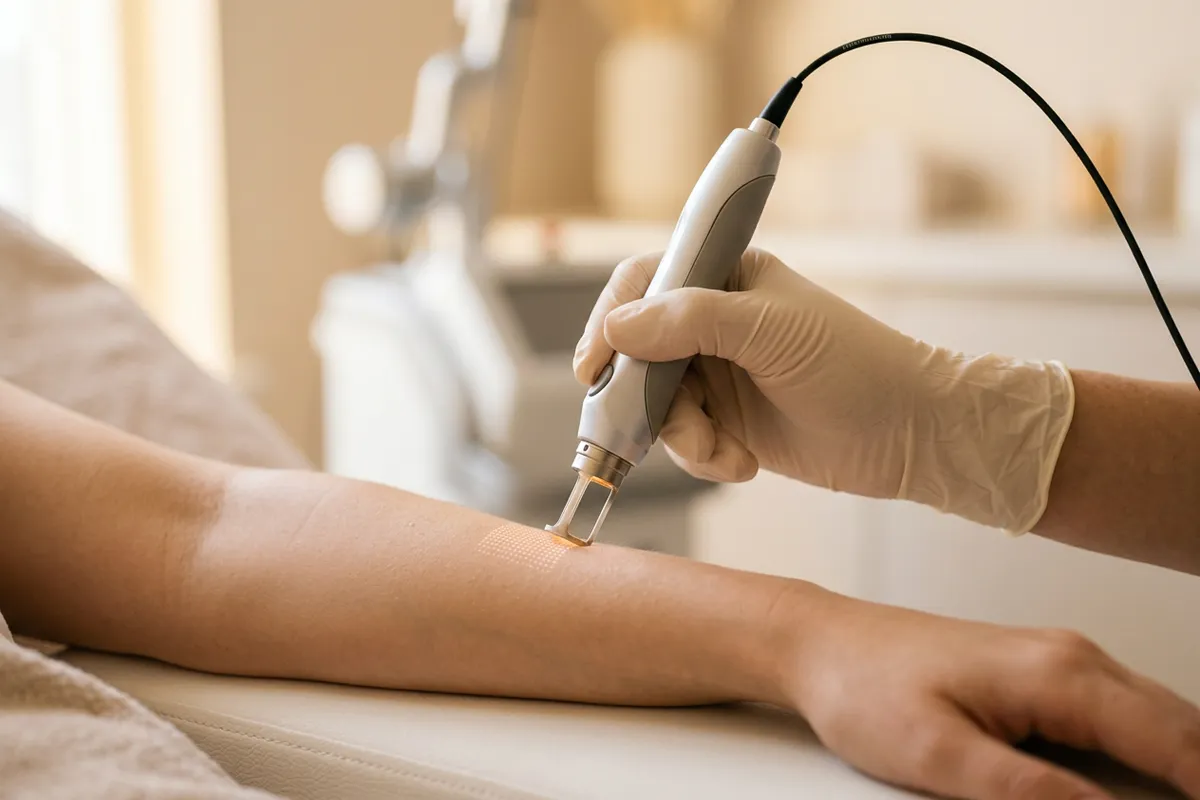
Laser energy creates a controlled tissue effect that triggers a healing response. It may be considered for selected scars and skin surface changes, but it cannot guarantee complete scar removal or the same response in every skin type. The cause, depth and location of a scar affect the choice of treatment.
Pain, dryness or a colour change in the genital area does not automatically justify laser treatment. Infection, hormonal changes and skin disorders need consideration first. Genital scar assessment may require a different examination and follow-up plan.
Evidence and uncertainty in vaginal applications
Results from skin resurfacing do not establish effectiveness for vaginal dryness, urinary leakage or sexual function. NICE does not recommend vaginal laser as routine treatment for menopausal genitourinary symptoms and limits its use to randomised controlled trials. Long-term benefit and safety remain uncertain.
A device name therefore cannot support promises of permanent rejuvenation, improved sexual pleasure or a particular success rate. Vaginal dryness care includes discussion of moisturisers, lubricants and local hormonal treatment where suitable. Observation or assessment by another specialist may be more appropriate than laser.
What is assessed before a treatment decision?
The consultation considers when symptoms began, previous treatments, medicines and the change you hope to achieve. Pregnancy or breastfeeding, a history of herpes, active infection, an open wound and problems after earlier procedures should be mentioned. Any proposed examination should be explained and performed with consent.
The goal may concern appearance, pain or dryness, and these require different decisions. Evidence for the proposed goal, alternatives and the option of no procedure should be discussed together. A fixed course of sessions should not replace an assessment of the underlying problem.
Risks, healing and review
Redness, swelling and tenderness can occur; burns, infection, scarring or pigment changes are also possible. With genital treatment, pain and discomfort during sex need specific discussion. Recovery depends on the treated tissue and the extent of the procedure.
Aftercare products, cleansing, exercise and resuming sexual activity require individual advice. Instructions for laser treatment on another body area should not be copied automatically. Increasing pain, offensive discharge, fever or a significant wound warrants medical assessment without waiting for a routine review.
Planning an assessment in Ordu and Fatsa
Bringing earlier reports and a list of products to the consultation in Fatsa can help avoid unnecessary repeat treatments. If travelling from elsewhere in Ordu, consider possible review visits as well as the initial consultation. Whether a procedure is appropriate and the healthcare setting required are clarified after assessment.
Conclusion
A fractional CO₂ laser decision should follow an accurate diagnosis and realistic expectations. For vaginal applications in particular, understanding evidence limitations, comparing established options and considering potential harms are central to an informed choice.
Clinic Address
The consultation practice is in Fatsa, Ordu. Use the contact details for appointment, location and follow-up information.
Frequently Asked Questions
Does fractional laser reliably cure vaginal dryness?
No. Long-term effectiveness and safety evidence for vaginal use is limited; the cause of dryness and other treatments should be assessed first.
How many sessions are needed?
A number cannot be set without assessment. The purpose, suitability and evidence for the proposed application should be established before considering a course.
Is the procedure painless?
It cannot be described as completely painless. Pain control depends on the treated area, and tenderness or pain can occur afterwards.
Will scars disappear completely?
Complete removal cannot be guaranteed. Scar type and the skin’s healing response affect the outcome, and other approaches may be more suitable.
About this article
Consultation and individual assessment
Op. Dr. Cennet Ay TokObstetrics & Gynecology Specialist · Fatsa, Ordu
Editorial details
- Content preparation
- Editorial information prepared using the medical sources listed below.
- Medical review
- The content update date does not indicate that a physician has medically reviewed this article.
Sources
Medical references used to prepare this article. Links open the original publications in a new tab.
- Johns Hopkins Medicine: Laser skin resurfacinghopkinsmedicine.org
- NICE: Transvaginal laser therapy for urogenital atrophynice.org.uk
- NICE NG23: Menopause, recommendationsnice.org.uk
This article provides general information and does not replace a medical consultation. Diagnosis, treatment suitability and follow-up are determined individually after a clinical assessment.