


 Physician & ExpertiseOp. Dr. Cennet Ay TokObstetrics & Gynecology Specialist
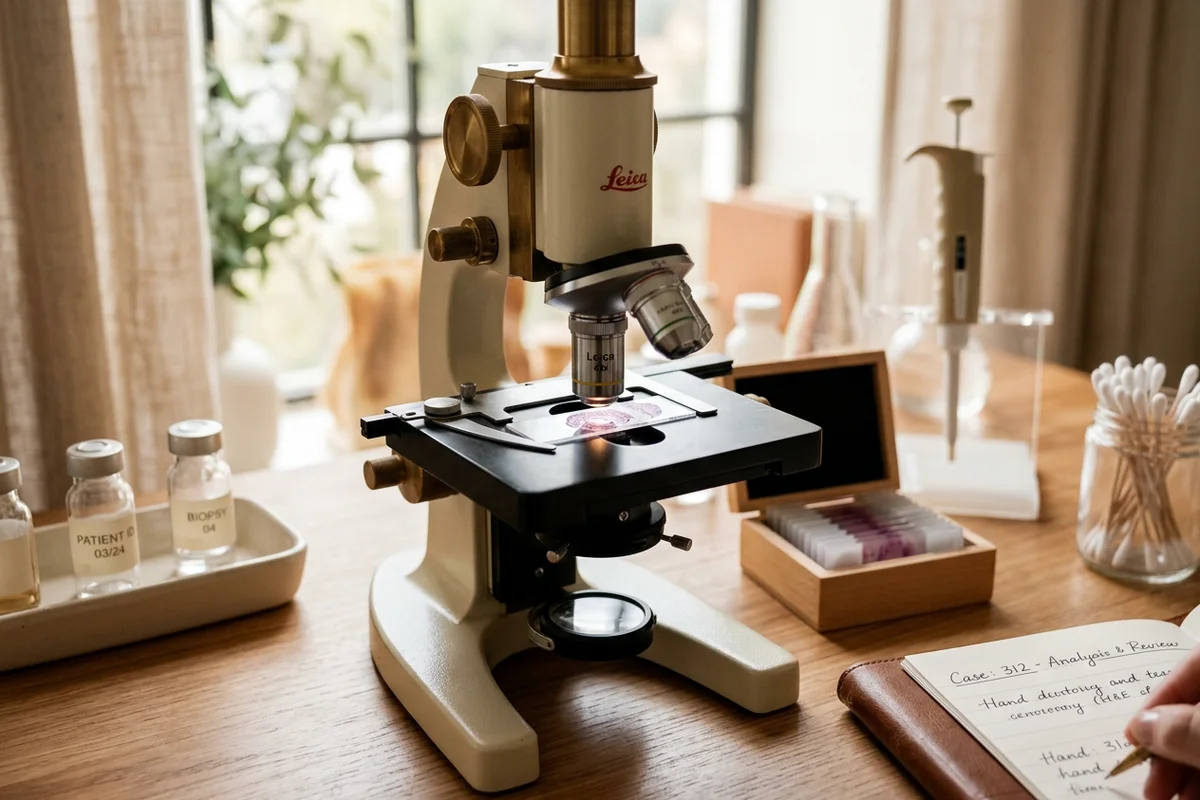 Cancer Screenings & Biopsies · Ordu
When may an endometrial biopsy be requested?
Bleeding after menopause, bleeding between periods or persistent heavy bleeding in selected circumstances may need investigation. The meaning of a thickened lining depends on age, cycle, symptoms and other findings. One ultrasound measurement does not indicate the same procedure for everyone.
Irregular menstrual bleeding can have various benign causes. A biopsy examines tissue to support diagnosis and treatment decisions. It is not routine cancer screening for every person without symptoms.
How is the sample taken, and how does it differ from a smear?
When appropriate, a speculum is used to view the cervix. A thin sampling device passes through the cervix to collect a small amount of endometrial tissue. The sample goes to pathology; a definite microscopic diagnosis cannot be given immediately by visual inspection.
A Pap smear examines cervical cells, whereas endometrial biopsy samples the womb lining. A normal smear therefore does not replace investigation of bleeding from the womb. Hysteroscopy may be used to inspect the cavity and take a targeted sample when indicated.
Outpatient sampling is not possible for everyone. A narrow cervix, pain or other factors may require another method and a suitable anaesthetic plan. The setting is decided through individual assessment.
What should be discussed before the biopsy?
Mention possible pregnancy, the last menstrual period, medicines and allergies. Blood-thinning treatment and a bleeding disorder history are particularly relevant; do not stop medicines independently. Fever, offensive discharge or suspected infection should be assessed beforehand.
Endometrial biopsy is not performed during pregnancy. Pregnancy possibility should be appropriately excluded and the reason for the procedure explained. Mention earlier cervical procedures or unsuccessful sampling to help planning.
Fasting or an accompanying person may be needed depending on the method and anaesthesia. Preparation is not identical for every biopsy. Clarify individual instructions and transport arrangements before attending.
How are pain and anxiety addressed?
Period-like cramping may occur, and pain can be more pronounced for some people. The procedure should not be described as painless for everyone. A difficult previous examination or concern about pain is relevant to planning.
Discuss pain-control options in advance according to your medical history. Ask which medicine is suitable rather than taking a high dose independently. You can ask for a pause or for the procedure to stop.
Knowing what will happen at each step can reduce uncertainty. Discuss when additional anaesthesia or a different setting might be considered. The aim is a manageable assessment performed with your consent, not sample collection alone.
Risks and symptoms after the biopsy
Light spotting and cramping can occur. Less common complications include infection, prolonged bleeding or perforation of the uterine wall. Tell the team if you feel faint during the procedure so that observation can be arranged if needed.
Fever, offensive discharge, increasing or severe abdominal pain and heavy bleeding need medical assessment. They should not be dismissed as normal healing. Follow the advice provided on aftercare, pads and returning to sexual activity.
Resuming daily activities depends on symptoms and any anaesthesia used. Sedation or general anaesthesia involves separate driving and accompaniment advice. Do not use another patient’s timeline as your own instructions.
What do an insufficient or normal result mean?
The pathology report may describe normal changes, possible polyps, hyperplasia or other findings. It is interpreted alongside symptoms and ultrasound. Turnaround depends on the laboratory process; one fixed number of days cannot be promised.
An insufficient sample may mean there was too little tissue for assessment and does not always mean normal. Persistent bleeding or inconsistent findings may require repeat sampling or hysteroscopy. Gynecological cancer assessment explains how diagnostic investigation differs from screening.
Report persistent or recurrent bleeding even after a normal result. One test cannot exclude every focal change in all circumstances. The next step depends on the complete report and clinical situation.
Sampling and result follow-up in Fatsa
Bring bleeding dates, ultrasound reports and a medicine list to the assessment in Ordu. The consultation in Fatsa plans the need for sampling, a suitable setting and result review. Discuss travel and any accompanying support when coming from surrounding districts.
Do not assume a missing result is normal; contact the relevant service after the advised interval. Keep a copy of the pathology report. Completing follow-up is as important as obtaining the sample.
Conclusion
Endometrial biopsy can help assess the womb lining when appropriately indicated. Pain control, sample adequacy and result follow-up should be planned together; persistent bleeding may need reassessment despite a normal report.
Clinic Address
The consultation practice is in Fatsa, Ordu. Use the contact details for appointment, location and follow-up information.
Frequently Asked Questions
Does a biopsy request mean I have cancer?
No. Tissue is examined to understand bleeding or another finding, and benign results are possible.
Is endometrial biopsy the same as a smear?
No. It samples the womb lining, while a smear assesses cervical cells.
What if the sample is insufficient?
Symptoms and other findings may call for repeat sampling or another investigation. Insufficient does not automatically mean normal.
Which bleeding after biopsy matters?
Heavy, increasing or prolonged bleeding needs assessment, especially with fever, offensive discharge or significant pain.
About this article
Consultation and individual assessment
Op. Dr. Cennet Ay TokObstetrics & Gynecology Specialist · Fatsa, Ordu
Editorial details
- Content preparation
- Editorial information prepared using the medical sources listed below.
- Medical review
- The content update date does not indicate that a physician has medically reviewed this article.
Sources
Medical references used to prepare this article. Links open the original publications in a new tab.
- Worcestershire Acute Hospitals NHS Trust: Endometrial biopsyworcsacute.nhs.uk
- Gateshead Health NHS Foundation Trust: Endometrial pipelle biopsygatesheadhealth.nhs.uk
- National Cancer Institute: Endometrial cancer screeningcancer.gov
- CDC: Screening for uterine cancercdc.gov
This article provides general information and does not replace a medical consultation. Diagnosis, treatment suitability and follow-up are determined individually after a clinical assessment.