


 Physician & ExpertiseOp. Dr. Cennet Ay TokObstetrics & Gynecology Specialist
 Ultrasound & Imaging · Ordu
What 4D Imaging Adds to Pregnancy Care
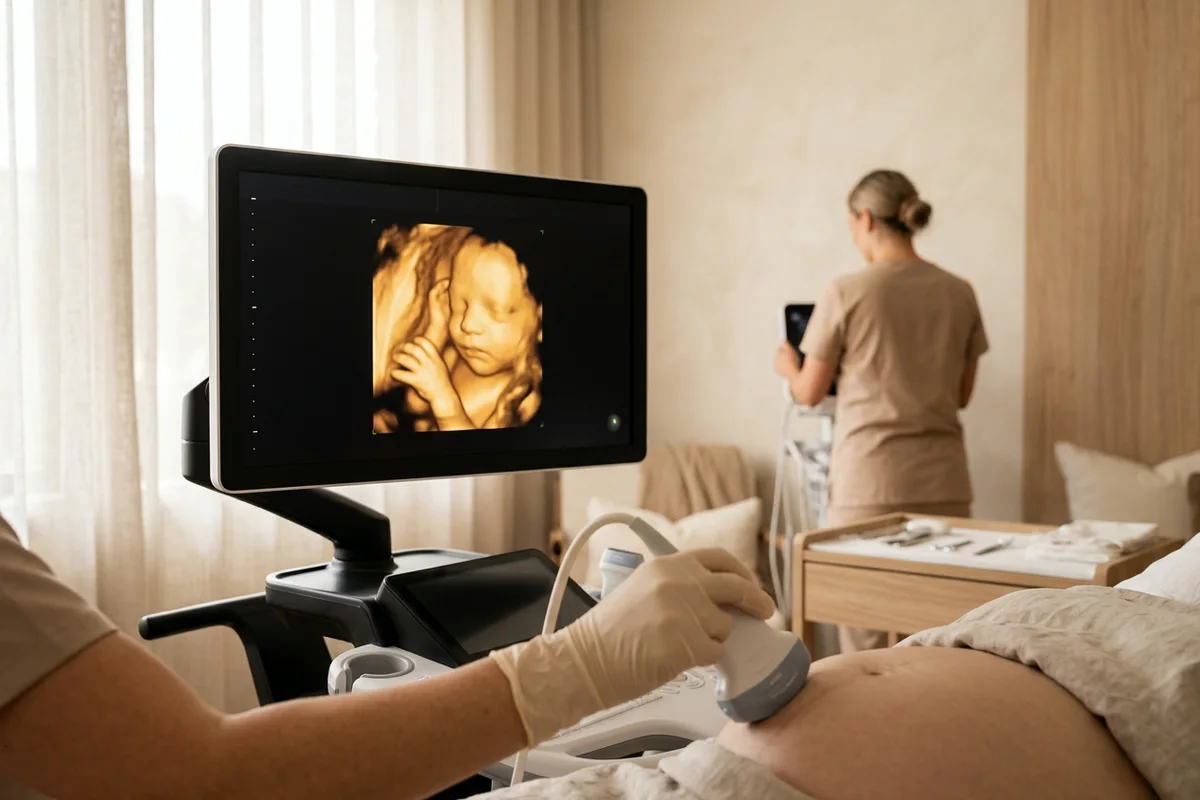
4D ultrasound shows three-dimensional ultrasound images in motion. It can display aspects of the baby's face and body surface, but the purpose of an examination remains medical assessment. A clear image does not mean that the scan answers every question about the baby's health.
The method used depends on what the clinician needs to assess. Different views may help evaluate growth, anatomy and gestational age. Where useful, 4D imaging complements this assessment; it does not replace examinations or other tests within pregnancy follow-up.
It is helpful to ask what was actually assessed, rather than focusing only on receiving an image. Discuss any structures that could not be seen, whether further testing is needed and the purpose of the next visit. A keepsake image and a medical report provide different kinds of information.
Is a 4D Scan the Same as an Anomaly Scan?
A 4D scan and an anomaly scan are not the same thing. An anomaly scan is a structured assessment of the baby's anatomy. The term 4D describes how images are displayed. Having that function on a machine does not make every examination a detailed anatomy assessment.
The word colour can also cause confusion. Doppler ultrasound examines blood flow and answers a different question from moving images of the baby's face. The appropriate technique depends on gestational age and the clinical reason for scanning.
A normal-looking 4D image cannot exclude every congenital condition or genetic disorder. Screening, diagnosis and imaging are related but distinct processes. An unexpected finding may lead to specialist assessment or discussion of further tests.
Timing and Image Quality
Timing is not decided solely by the wish to see the baby's face. Gestational age, previous scan results and the question being investigated all matter. There is no single best week or mandatory 4D appointment that applies to every pregnancy.
The baby's position, movement and surrounding fluid can affect the views obtained. A hand or another structure in front of the face may prevent a clear surface image. This alone does not indicate a health problem.
If the required assessment cannot be completed, a repeat examination or another approach may be recommended. Extending an examination unnecessarily to obtain a more attractive image is not appropriate. The need for medical information takes priority over a keepsake photograph.
What Happens During the Examination?
The visit begins with a review of gestational age, previous results and the reason for the examination. Gel is placed on the abdomen and a probe is used to obtain images. Routine abdominal ultrasound does not require anaesthesia.
Ultrasound does not use ionising radiation. It should nevertheless be performed for a medical reason by trained healthcare professionals. During pregnancy, exposure time and equipment settings are selected to obtain the necessary information appropriately.
Before leaving, ask which assessments were completed and how to obtain the report. If another prenatal ultrasound appointment is planned, clarify its purpose and how it differs from obtaining 4D images.
Planning Your Ultrasound Visit in Fatsa, Ordu
When arranging ultrasound in Ordu, remember that the clinic is in Fatsa. If you are travelling from Ünye, Perşembe or an inland district, provide your gestational age and existing reports before the visit. This helps clarify the purpose of the appointment.
Bring previous ultrasound reports, pregnancy records and a list of medicines. Ask in advance whether any preparation, such as a full bladder, is needed. Preparation is not identical for every type of ultrasound.
If another team provides your ongoing care, plan how the new report will reach them. Keep a written note of any repeat appointment and its purpose to organise travel between districts.
Conclusion
The value of 4D ultrasound in Ordu lies in the information it adds to pregnancy care, rather than image clarity alone. Understanding its limitations, timing and next steps supports informed decisions. At your consultation in Fatsa, you can discuss the appropriate examination using your existing records.
Clinic Address
The consultation practice is in Fatsa, Ordu. Use the contact details for appointment, location and follow-up information.
Frequently Asked Questions
Does every pregnancy need a 4D scan?
An additional 4D scan is not necessary for every pregnancy. The useful imaging method depends on the clinical question in your care.
Does an unclear view of the face mean something is wrong?
No. Position, movement or structures in front of the face can limit the image. Health assessment is not based on facial image clarity.
Is colour ultrasound the same as 4D ultrasound?
The terms are sometimes confused. Doppler assesses blood flow, whereas 4D displays moving three-dimensional images. Ask which examination is planned.
Should I fast before a 4D scan?
Preparation depends on the examination. Follow your appointment instructions instead of fasting or drinking extra water on your own.
Does a normal 4D image rule out all conditions?
No. Ultrasound has diagnostic limitations. Screening tests and other checks are considered separately even when surface images look normal.
About this article
Consultation and individual assessment
Op. Dr. Cennet Ay TokObstetrics & Gynecology Specialist · Fatsa, Ordu
Editorial details
- Content preparation
- Editorial information prepared using the medical sources listed below.
- Medical review
- The content update date does not indicate that a physician has medically reviewed this article.
Sources
Medical references used to prepare this article. Links open the original publications in a new tab.
This article provides general information and does not replace a medical consultation. Diagnosis, treatment suitability and follow-up are determined individually after a clinical assessment.